
Bringing Order to the Chaos of Capital Projects

Capital projects succeed or fail based on how well engineering information is controlled, shared, and trusted across the project lifecycle. As projects in regulated, asset-intensive and process-driven industries become larger, more complex, and more data-intensive than ever, engineering teams, EPCs, owner-operators, and external partners must coordinate millions of documents across long project lifecycles—all while meeting strict regulatory, security, and performance requirements. Yet many organizations still rely on disconnected systems, manual processes, and legacy file structures to manage engineering information. The result is predictable and costly: delays, rework, compliance risk, lost knowledge, and budget overruns.

Bringing Order to the Chaos of Capital Projects is a definitive guide from Frost & Sullivan that explains why Engineering Information Management (EIM) has become a critical business imperative—and how organizations can apply proven best practices to optimize the management of engineering information across capital projects and ongoing operations.

Fill out the form on the right to download Bringing Order to the Chaos of Capital Projects.


Industrial plant representing complex capiatl projects requiring EIM

Who Should Read this eBook? 

This guide is essential for leaders and teams in oil & gas, utilities, chemicals, mining, infrastructure, and other asset-intensive industries who are responsible for capital projects, operations, maintenance, compliance, and digital transformation.

capital-projects-Apr-13-2026-02-21-11-4396-PM
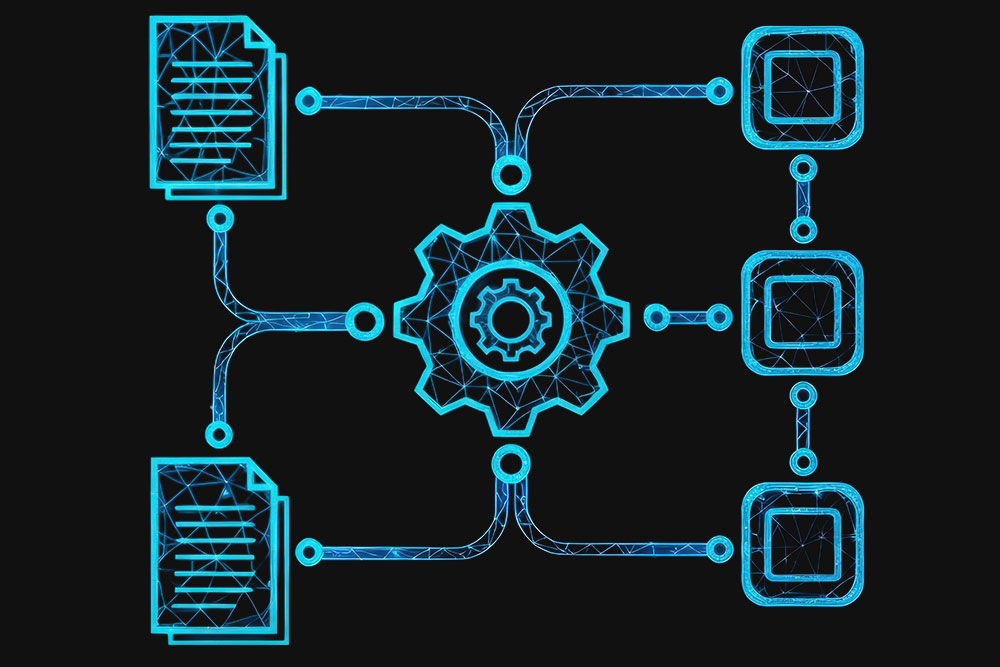
Engineering Information Management workflow graphic

What is Engineering Information Management (EIM)?

Engineering Information Management is a structured approach to finding, managing, sharing, and controlling engineering and maintenance information throughout the full lifecycle of capital-intensive projects. EIM solutions—such as Adept by Synergis Software—provide a centralized system of record for drawings, specifications, maintenance data, and related documentation—ensuring teams always work from accurate, current information.

The ebook explains why EIM is no longer a “nice to have,” but a necessity as digital transformation, regulatory pressure, and data growth reshape how complex projects are executed.

Unlike shared drives or generic document systems (that solely store files but not control them), EIM enforces engineering-specific version control, workflows, and lifecycle governance across complex projects.

Why Does Engineering Information Chaos Slow Projects Down? 

Knowledge workers spend 15% to 35% of their time searching for information, and nearly 10% recreating information that already exists but cannot be found. This “intellectual rework” costs thousands of dollars per worker each year and directly delays project startup. The eBook shows how centralizing engineering data dramatically reduces search time, eliminates duplicate work, and accelerates construction and commissioning. 

 

Engineer searching for documents

How does EIM Improve Capital Project Performance? 

This guide outlines industry best practices for using EIM to:


  • Facilitate collaboration across sites and external partners
  • Manage all project documentation in one controlled environment
  • Automate workflows and approvals
  • Unify business and engineering systems


Platforms like Adept operationalize these best practices by centralizing project documentation, automating workflows, and maintaining traceability across EPCs, owner-operators, and downstream operations. By applying these practices, organizations can accelerate project startup, improve margins, and reduce the risk of errors caused by outdated or missing information.

For EPCs, owner-operators, and asset managers, EIM ensures engineering information remains accurate, complete, and usable from design through construction, handover, and operations.

Engineers reviewing plant during capital project handover

Why is Project Handover Such a Major Risk? 

The transition from EPCs to owner-operators is one of the most expensive and error-prone phases of a capital project. The eBook highlights that handover costs for a $1 billion facility can reach up to $20 million, with owner-operators often spending additional CAPEX correcting missing or incomplete information. EIM simplifies handover by ensuring engineering data is complete, structured, and usable long after construction ends.

 

Engineer inspecting plant to support maintenance and data accuracy

How Does EIM Reduce Downtime, Compliance Risk, and IP Loss? 

The report explains how EIM supports proactive maintenance, audit readiness, and intellectual property protection. By maintaining a single source of truth with strong access controls, audit trails, and secure vaulting—without locking data into proprietary formats—organizations reduce unplanned downtime, streamline compliance, and protect valuable engineering knowledge.

Download the eBook to learn proven Engineering Information Management best practices, real cost benchmarks, and how organizations use platforms like Adept by Synergis Software to reduce capital project risk.


FAQ

Others frequently ask…
  • Data explosion, regulatory pressure, and digital transformation have made EIM a necessity rather than a “nice to have.” Without EIM, organizations struggle to keep projects on track, meet compliance demands, and manage the growing volume of engineering and maintenance data required for modern capital projects.

  • EIM serves as the central information repository needed to maintain complex, process-driven assets. unplanned downtime—often caused by inadequate maintenance and poor access to current information—can cost refineries tens of millions of dollars annually, and that EIM enables proactive maintenance by connecting people to the right information at the right time.

  • EIM reduces compliance risk by providing centralized document access, strong version control, and full audit trails across thousands to millions of documents and workflows. The eBook explains that organizations using EIM can streamline audits, reduce compliance costs, and lower the risk of regulatory issues in highly regulated industries such as energy and infrastructure.

  • EIM protects intellectual property by enforcing granular access controls, maintaining audit trails, and securing documents without locking them into proprietary formats. IP theft represents hundreds of billions of dollars in annual losses, and that EIM plays a critical role in safeguarding engineering knowledge across global projects and partners.

  • The eBook advises organizations to select EIM solutions that are easy to implement and use, flexible, scalable, non-proprietary, affordable, and backed by proven vendors with reference customers. EIM is not one-size-fits-all and must align with the complexity of asset-intensive, process-driven industries.

  • Adept as a flagship EIM solution successfully implemented by over 1,000 organizations across utilities, energy, chemicals, mining, oil & gas, and infrastructure. Adept is presented as a real-world example of how EIM best practices can be operationalized at scale.